
Assessments from different industry experts show that sustainability is no longer an additional practice introduced after a water park is built. Today, many decisions, from facility design and equipment selection to water use and energy management, need to be considered from the very beginning of a project.
Sustainability Starts with the Project
How efficiently a water park uses its resources is not determined solely by improvements made after the facility opens. Decisions made during the design phase directly affect how the facility will operate for many years.
Pumping and filtration systems, water circulation, energy infrastructure and the materials to be used are all important considerations. For investors, looking beyond the initial installation cost and considering the long-term operating expenses of a facility is therefore becoming increasingly important.
Water Reuse Is One of the Main Priorities
Efficient water use, one of the most important resources for water parks, is also at the centre of sustainability efforts.
Closed-loop systems and advanced water treatment technologies aim to keep the same water within the system for as long as possible. This can help reduce water consumption while also making operational processes more efficient.
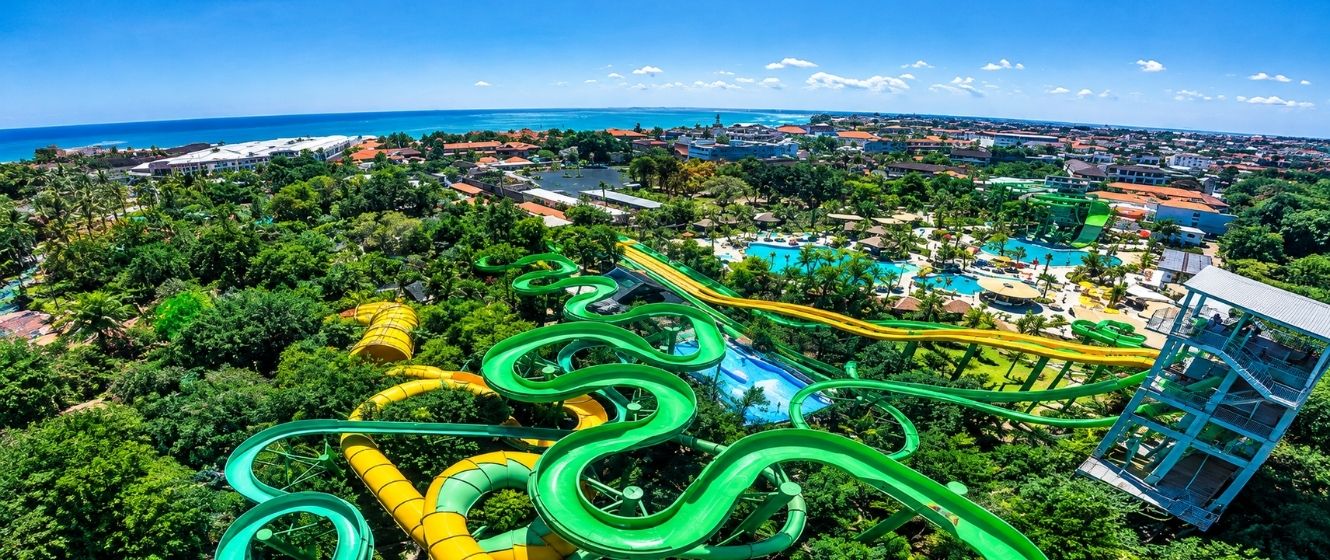
One notable example in this area is Waterbom in Bali. The facility addresses waste reduction alongside water and energy management as part of its sustainability approach and is continuing its efforts towards a net-zero emissions target by 2033.
Energy Consumption Is Also Changing Design Decisions
Sustainability in water parks is not limited to water. Pumps, filtration systems, climate control and lighting, which are essential parts of daily operations, can require significant amounts of energy.
For this reason, the use of energy-efficient equipment and, where appropriate, renewable energy sources is becoming increasingly relevant in new investments.
The aim is not only to reduce environmental impact. More efficient systems can also provide advantages in terms of the long-term operating costs of facilities.
Smart Planning Matters as Much as Major Investment
The growing focus on sustainability in water parks is also changing the approach to investment. A system that may require a somewhat higher initial investment can enable a facility to operate with lower operating costs over many years.
As a result, calculations that take the entire life cycle of a facility into account are expected to become increasingly important in the future of the sector, rather than focusing solely on achieving the lowest initial investment cost.
What Will the Water Parks of the Future Look Like?
In the coming years, how a water park uses its resources will be just as important as the experience it offers to visitors.
Data such as how much water and energy are consumed, how much waste is recovered and how much resource is used per visitor can become increasingly important in evaluating the performance of operators.
In short, the new era of water parks is not only about developing bigger slides or creating different attractions. Facilities that operate more efficiently with fewer resources, keep operating costs under control and reduce their environmental impact will also have an important place in the future of the sector.
Sustainability is no longer a separate topic in the future of water parks; it is emerging as an integral part of design, investment and operations.