
Istanbul’s green spaces are increasingly becoming a topic of discussion in terms of the city’s quality of life and the future of its public spaces. One of the latest examples of this is the Büyükdere Atatürk Nursery and Horticulture School.
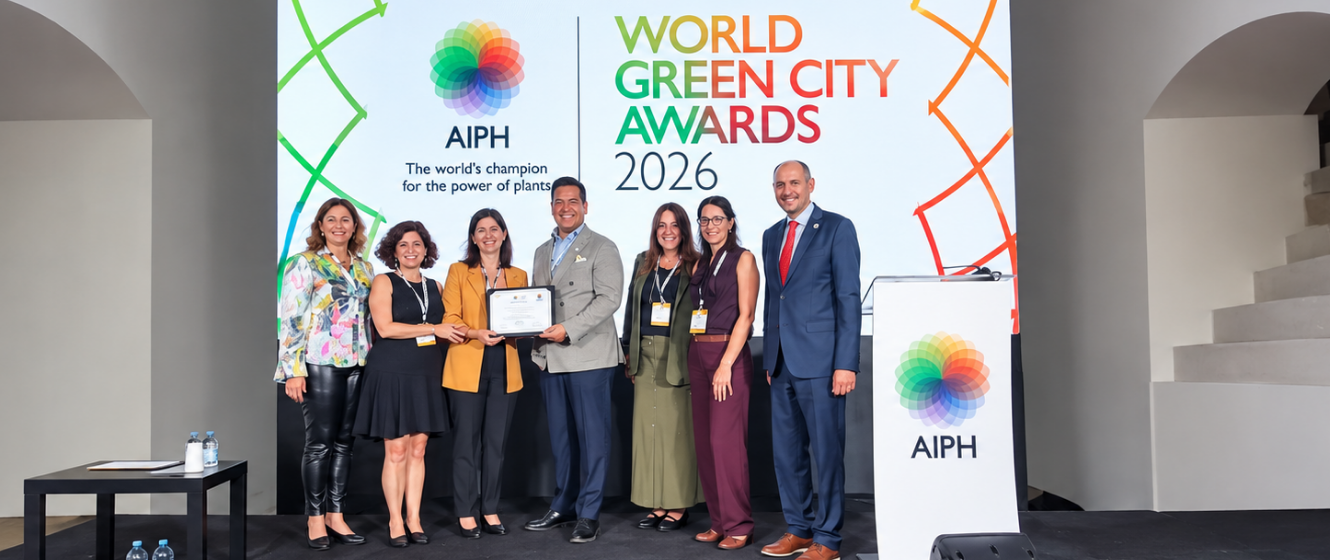
The project, which was redeveloped and given new functions by Istanbul Metropolitan Municipality, was selected as one of three finalist projects worldwide in the “Living Green for Social Cohesion & Inclusive Communities” category of the AIPH World Green City Awards 2026. In the evaluation, the results of which were announced at the AIPH 78th Annual Congress held in Bari, Italy, on 15 September 2026, the project received the “Highly Commended” (Special Jury Commendation) distinction.
The category award went to the “Green City Chiang Rai – Plant Trees, Plant People” project from Chiang Rai, Thailand.
The Historic Site Becomes Part of Urban Life Again
The story of Büyükdere Atatürk Nursery dates back to 1928. Established on the instructions of Atatürk, the historic nursery remained one of Istanbul’s important green spaces for many years. Following the works carried out, the site was brought back into urban life with a new structure that brings together different functions.
Today, the area includes the Horticulture School, Nature Sciences Library, local seed production and preservation centre, educational areas, children’s playgrounds, sports areas, and pedestrian and cycling paths.
This structure allows the site to be used not only as a park where people spend their time, but also as a public space that offers opportunities for learning, production, physical activity and social interaction.
The Understanding of Green Spaces is Changing
The prominence of Büyükdere Atatürk Nursery in the international evaluation is one example of how the approach to green spaces in cities is changing.
Today, in many cities, parks and open spaces are no longer considered solely as landscape arrangements. Green spaces are increasingly being evaluated together with different aspects such as social life, sports, education, recreation, climate resilience and biodiversity.
This approach also stands out among the AIPH 2026 World Green City Awards finalists. Projects from different cities focus on addressing different needs through green spaces, ranging from social cohesion and urban agriculture to climate resilience and green infrastructure.
A Multifunctional Space from Education to Recreation
One of the elements that makes Büyükdere Atatürk Nursery stand out is the way educational and production activities have been considered together with the natural character of the site.
Various educational programmes are organised through the Horticulture School, covering subjects such as permaculture, bonsai, medicinal and aromatic plants, fruit tree grafting, composting and sustainable urban agriculture.
Activities for children and different age groups also diversify the use of the site.
As a result, the green space has evolved from being simply a place to spend time in nature into an urban space where learning, physical activity, production and social interaction take place together.
A Notable Example for Istanbul
The international recognition received by Büyükdere Atatürk Nursery is not regarded solely as an award achievement for Istanbul. The project also demonstrates a current approach to how green spaces can be used in the future of cities.
In today’s cities, the spaces needed are increasingly expected to bring together different users and different needs at the same location rather than serving a single function. Parks are becoming spaces where sports, recreation, education, social life and contact with nature can be experienced together.
Büyükdere Atatürk Nursery has taken its place on the international stage as one of the notable examples of this transformation in Istanbul.
The future role of green spaces in cities is not simply about creating more trees and more parks. The real challenge is to make these spaces an active part of people’s everyday lives. The recognition received by Büyükdere Atatürk Nursery on the international stage also brings one of Istanbul’s examples of this approach into focus.